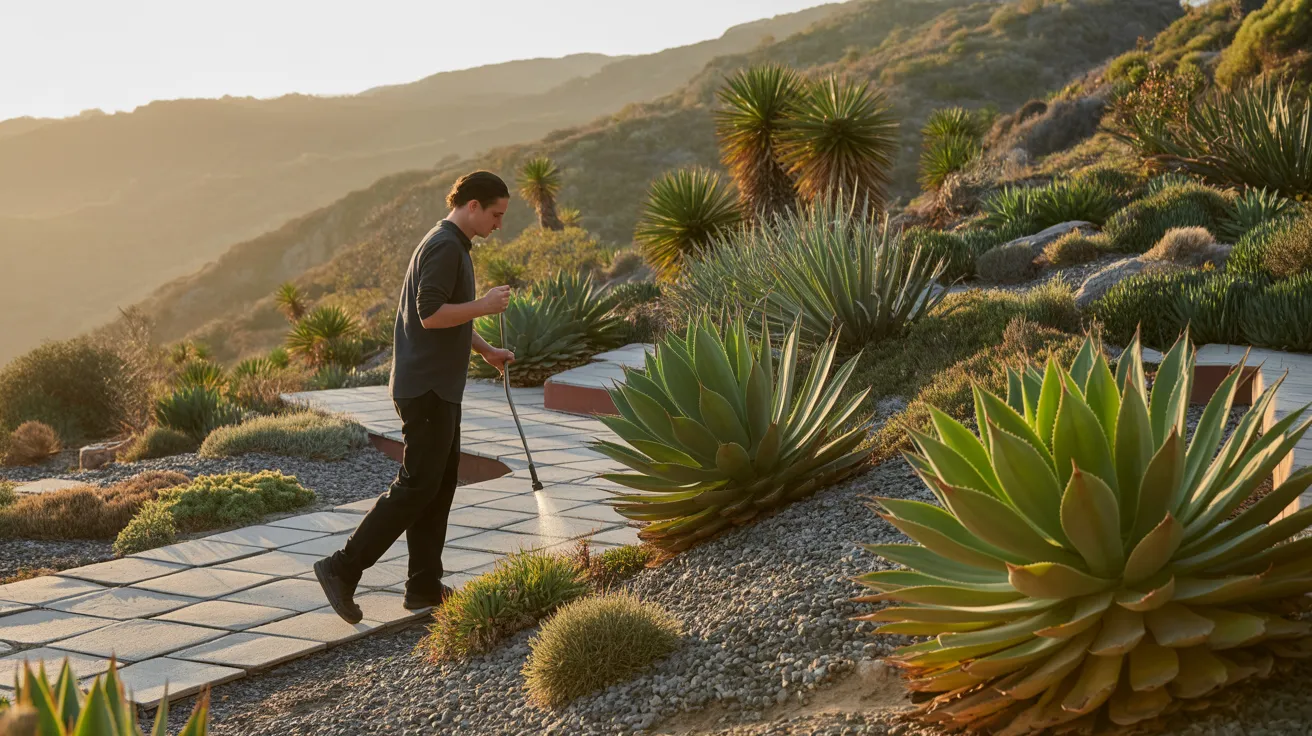
Hire El Cajon specialists who read your microclimates-including semi‑arid heat, DG over clay lenses, canyon breezes, and cold sinks-and create plant‑centric landscapes with local succulents, manzanitas, and Ceanothus. We arrange for fire‑wise airflow, utilize mineral mulches, and add permeable patios and bioswales. The irrigation system is hydrozoned, pressure‑regulated, ET‑driven, with cycle‑soak on slopes. We confirm infiltration, eliminate perched water, and document runtimes and seasonal care. You receive year‑round bloom, reduced water needs, and resilient hardscape tuned to local codes-discover how it all comes together.
Key Points to Remember
- Area professionals who understand El Cajon's semi‑arid climate, assessing local microclimates and soil composition to maximize garden vitality, shade patterns, and water conservation.
- Drought‑resistant garden choices featuring native species, succulent varieties, drought‑adapted shrubs and UC Verde lawn alternative, complemented by stone mulch coverage and minimal soil amendments.
- Efficient irrigation design featuring hydrozoned drip systems, pressure‑controlled sprinklers, weather‑based controllers, and cycle-and-soak scheduling to prevent excess water flow.
- Water-permeable surfaces and grading solutions that guide roof and patio runoff into drainage channels, enhancing water infiltration and safeguarding structural foundations.
- Professional code management: defensible-space maintenance, recycled water indicators, integrated pest management cycles, and thorough documentation featuring verification audits and guarantees.
Why Local Expertise Matters in El Cajon
Across El Cajon's sun-drenched, semi-arid terrain, professionals carefully adjust plant selections, watering systems, and soil conditioning to align with microclimate requirements. You'll choose drought-tolerant plants like Ceanothus, Arctostaphylos, and Salvia that flourish in alkaline soil conditions, sunny exposures, and intermittent breezes. Specialists customize water delivery based on slope characteristics and soil absorption to avoid runoff issues. They evaluate ground conditions-typically featuring granitic soil above clay strata-and add specific enhancements to eliminate water stagnation.
You'll need to navigate municipal requirements: safety buffer zones, water recycling markers, and drainage regulations that affect plant spacing, ground cover depth, and valve configurations. Local experts monitor common pest problems-scale-farming ants on citrus trees, tree branch borers, and spider mite populations expanding in hot weather-and schedule targeted IPM, beneficial insect releases, and maintenance windows that protect nesting wildlife while maximizing plant health.
Sustainable Outdoor Planning for All‑Season Elegance
Despite weather patterns change and moisture arrives in patterns, you can create a hardy weather-resistant landscape by harmonizing seasonal patterns, moisture requirements and layout to El Cajon's desert-like environment. Initialize with site condition mapping: observe light direction, temperature retention, natural ventilation, and chilly zones in low areas. Configure hydro‑zones to drainage patterns and precision watering, then layer protective covering to maintain ground warmth and reduce moisture loss.
Design seasonal interest through strategic layering of canopy, understory, and ground plane. Schedule blooming periods, foliage changes, bark features, and seedhead displays to span winter dormancy and summer peaks, providing consistent nectar sources and wildlife habitat. Analyze soil composition to guide amendment applications and watering patterns, focusing on deep, infrequent irrigation. Maintain proper pruning for air circulation and light penetration, and install porous hardscaping to capture runoff and nourish root zones.
Water-Wise Plants That Flourish
You'll create a local succulents selection suited for El Cajon's warm, dry summers-think Dudleya species, Agave shawii, and Opuntia that create structure with low water needs. You'll combine them with a drought-tolerant shrub selection such as Ceanothus 'Yankee Point', Artemisia californica, and Salvia clevelandii to reinforce terrain and feed pollinators. You'll recommend loose, quick-draining soils, southern/southwestern orientation, and deep, periodic watering to lock in vitality and minimal upkeep.
Natural Succulent Designs
Design your El Cajon garden with a collection of indigenous and adapted succulents that thrive in sunny, desert-like conditions, radiant warmth, and occasional water scarcity. Focus on sun-exposed areas with well-draining, mineral-rich soil. Position Agave shawii, Dudleya edulis, and Dudleya pulverulenta on raised rocky areas; limit summer irrigation once established. Add Hesperaloe parviflora and Epilobium canum as pollinator-friendly succulents; their tubular blooms entice hummingbirds and native bees through peak heat. For winter appeal, use Cotyledon orbiculata and Aloe striata as maritime varieties that withstand inland conditions when provided afternoon shade. Include Echinocereus triglochidiatus for spring color and ferocactus for dramatic effect. Position specimens for good air circulation, mulch with stone topping, and irrigate deeply but infrequently to promote dense formations and plant health.
Water-Wise Shrubs Collection
While inland heat reflects off concrete and building surfaces in El Cajon, select woody shrubs that withstand 100°F spikes, sandy-clay soils, and long rainless stretches. Select Arctostaphylos 'Howard McMinn' for year-round form; it tolerates lean, fast-draining sites and requires deep, infrequent irrigation. Plant alongside Leucophyllum frutescens; it blossoms after monsoonal humidity, enticing garden pollinators while withstanding reflected heat. Ceanothus 'Ray Hartman' delivers spring bloom and quick privacy; minimize summer water once established. Salvias like 'Clevelandii' and 'Pozo Blue' thrive in alkaline soils and Mediterranean conditions.
Incorporate pink muhlygrass like an effective buffer for airflow and fire-wise spacing. Site butterfly bush on a hot south or west position with strict drainage; prune dead flowers to prevent reseeding. Apply inorganic ground cover, not bark; water monthly in summer.
Intelligent Irrigation Solutions and Control Systems
Frequently neglected, effective irrigation in El Cajon begins by pairing watering systems to botanical water demands and microclimates. Combine drip emitters for established shrubs, multi-pattern rotary nozzles for turf, and micro-sprinklers for groundcovers under tree coverage. Organize plants by irrigation areas and sunlight levels, then implement sensor zoning to separate clay pockets from decomposed granite, and hillsides from flat areas.
Install pressure-regulating sprinkler heads with check valves to prevent low-point drainage and misting. Utilize flow sensors to flag system leaks and blockages. Program climate-responsive scheduling that incorporates local ET rates, adapts to coastal morning conditions, and extends cycles during Santa Ana heat. Water pre-dawn, run longer but fewer cycles on drip, and implement cycle-soak irrigation on inclines. Conduct reviews every three months: check precipitation uniformity, rates, and root-zone water penetration.
Outdoor Hardscaping: Essential Elements
In El Cajon's hot, low-rainfall climate, you'll want to choose patio configurations that minimize heat gain, integrate shade for native understory plants like manzanita and coast live oak, and provide proper runoff to landscaped water-retention areas. You'll choose walkway materials-permeable pavers, decomposed granite with stabilizer, or textured concrete-depending on slip resistance, albedo, and root-zone protection for adjacent drought-resistant vegetation. For sloped landscapes and planting tiers, you'll need to include retaining walls with engineered drainage, geogrid reinforcement where needed, and growing areas to accommodate indigenous ground-level plants and minimize heat reflection.
Outdoor Living Space Designs
Patios are essential for outdoor living in El Cajon by establishing durable, Mississauga hvac contractor temperature-resistant surfaces that connect to planting zones and drainage. It's important to size the slab to microclimate: position shade structures west, and select high-SRI finishes to reduce summer heat. Choose permeable bases that decompress clay subsoil and direct runoff to bioswales or citrus basins.
Choose paver arrangements that guide movement and establish activity spaces-opt for herringbone for high-traffic areas at grill zones, arrange stack bond to achieve sleek dining spaces, and incorporate ashlar patterns to gentle boundaries beside low-water sages. Create a arcing seat-wall encircling a fire pit, mindful of wind direction and ensuring spark clearance from planted areas. Install thermal-break borders of decomposed granite along garden transitions. Position root barriers adjacent to patio boundaries, enhance surrounding soils, and incorporate drip systems to protect foundations while irrigating garden areas.
Walkway Materials Guide
Map out your circulation pattern on the design, then select materials appropriate for El Cajon's weather patterns of heat, clay subsoils, and periodic stormflow. Opt for surfaces that moderate temperature and allow runoff penetration. Set permeable pavers on top of an open-graded base (using 3/4" clean, then 3/8" bedding) to prevent standing water on dense clays and safeguard adjacent root zones. Specify high-SRI colors to minimize heat gain near drought-tolerant understories.
For informal pathways, use decomposed or crushed granite; stabilize using either resin binder or 5% fines, compact to 95% density, and create a 1.5% crown for proper drainage. Use steel or mortared curbing to stop pathway material from entering planting zones. For shaded locations, choose textured concrete or stone paving divided into 24-36" units for secure footing when leaves accumulate. Maintain 3/8" open joints using angular grit filler to ensure proper water penetration.
Professional Retaining Wall Solutions
Following the installation of safe, permeable pathways in El Cajon's challenging conditions, you'll typically require grade control that respects root systems and water flow. Choose retaining wall systems that reinforce gradients without limiting water or air. For gentle slopes, install gravity walls with solid, compressed base, angled setback, and water-permeable aggregate. Set up perforated drains surfacing down the gradient to eliminate hydrostatic pressure from building up.
When designing for habitat and infiltration, select boulder terraces. Install each boulder upon undisturbed subgrade, with interlocking faces, and add angular drain rock topped with compost-amended loam to support native chaparral vegetation. If building taller walls, use geogrid-reinforced segmental units, properly sized for clayey soils and seismic conditions. Keep safe distance from tree trunks, and route overflow to vegetated swales or rain gardens.
Exterior Lighting: Enhancing Security and Atmosphere
Strategically speaking, outdoor lighting in El Cajon needs to maintain a careful balance between safety, plant health, and dark-sky compliance. You'll want to align circuits with different microclimates, while ensuring fixtures are properly shielded to eliminate glare and leaf scorch. Opt for warm 2700K LEDs with full cutoffs to preserve nocturnal pollinators and minimize skyglow. Install LED pathway bollards at 12-14" height, spaced according to fixture-to-fixture photometrics, to provide even 1-3 foot-candles without overwhelming root systems.
Position motion sensors around entry points and yard perimeters to limit run time and heat near drought-adapted vegetation. Light up mature olive and citrus foliage from high mounting points, aiming illumination to eliminate trunk hotspots. Path illumination should recess into risers with 20-40° beam angles. Divide transformer zones by plant water needs, and configure dimming schedules to align with seasonal darkness duration and lighting regulations.
Alternative Lawn Solutions and Easy-Care Ground Coverage
Consider replacing high-water lawns in El Cajon with drought-resistant lawn replacements like low-mow Bermudagrass or UC Verde buffalograss selections that maintain color in heat. For local spreading plants, look into Fragaria chiloensis, Dymondia margaretae, or Arctostaphylos 'Emerald Carpet' for fast horizontal growth, soil stabilization, and low inputs under full sun. To reduce maintenance needs, sheet‑mulch to suppress weeds, install inline drip at 12-18 inches on-center, and add a 2-3 inch inorganic mulch edge to reduce water runoff and mowing needs.
Drought-Resistant Grass Alternatives
The most effective "turf" in El Cajon is often not grass at all, but a strategic combination of water-wise plants and turf substitutes tailored to your specific microclimate, soil type, and walkway needs. You'll want to find the right mix of aesthetics, watering demands, and wear resistance.
For lawn options, select buffalo grass (Bouteloua dactyloides) in well-lit, well‑drained sites; it performs well with just 12-18 inches of yearly water once established, can be maintained at 3-4 inches, and handles light activity. In warmer, reflective areas, install hybrid bermuda or drought‑tolerant zoysia for denser wear spaces; change sprinkler systems to high‑efficiency rotary nozzles and irrigate deep and occasionally.
Where water access is restricted or shadowy conditions exist, install permeable artificial grass over a compacted, graded DG base and microbe-resistant infill. Border using masonry or steel edging, maintain crown grades at 1-2%, and integrate sub‑surface drains at low points.
Indigenous Ground-Covering Plants
Having established the lawn needs, switch to indigenous ground-covering species that bind soil, inhibit weeds, and reduce water perfectly suited to El Cajon's hot climate and nutrient-poor soils. Pick species depending on sunlight levels and soil texture. On hot south-facing areas, plant Salvia sonomensis, establish Dudleya-friendly spots, and place Baccharis pilularis 'Pigeon Point' to prevent erosion on decomposed granite. Under filtered light, select Heuchera maxima and Galium californicum to create low-light plantings.
For hot outdoor spaces, Arctostaphylos 'John Dourley' and Ceanothus 'Yankee Point' create a thick spreading mat that controls surface drainage and creates habitat for beneficial insects. Along parkways, Dymondia margaretae develops a hardy surface mat that endures walking pressure and heat reflection. For cyclical flowering, integrate Fragaria chiloensis and Satureja douglasii where sun exposure decreases later in the day. Arrange specimens for total coverage in two seasons' time; align mulch levels with root requirements.
Quick Guide to Minimal-Care Installation
Initiate the setup process for El Cajon's warm and alkaline fast‑draining soils: thoroughly water the day prior to planting, then place 1‑gallon containers or plugs in the morning coolness to prevent the roots from heat. Add amendments at the plant site with chunky compost; keep fertilization minimal. Position groundcovers to establish complete coverage in one season, then apply a 2-3 inch layer of gravel mulch to control weeds and maintain moisture.
Install drip installation with drippers operating at 0.6 gph, using two emitters for each plant, with dedicated valves distinct from shrub irrigation. First flush the lines, then configure watering cycles: quick pulses during summer months, deep winter irrigation as needed. For lawn alternatives, integrate artificial turf with positioned rock features that guide drainage to planted swales. Fasten turf seams, maintain crowned base preparation, and install permeable edging to avoid surface uplift and protect weed barrier installation.
Sustainable Practices: Mulch, Soil Health, and Water Conservation
When creating landscapes for El Cajon's semi-arid microclimate, it's crucial to implement landscape materials and watering methods that reduce evapotranspiration and build resilient plant communities. The goal is to maintain 2-3 inches of shredded bark mulch, keeping trunks clear, to regulate ground temperature, prevent weed growth, and reduce moisture loss. Combine mulch with compost integration: blend 1-2 inches of mature compost into planting zones to enhance soil nutrient retention, soil biology, and moisture retention without overfertilizing natives.
Verify water absorption with percolation tests; where clay lenses are present, cultivate the subsoil and add angular mineral mulch. Set drip watering to correspond to root-zone radii, applying deeper, less frequent water applications. Collect roof water through rain harvesting into collection areas or cisterns, direct overflow to bioswales, and regulate it through basins planted with drought-tolerant Arctostaphylos, Salvia, and Muhlenbergia adapted for episodic water recharge.
The Design-Build Journey: Consultation to Final Delivery
After establishing mulch depths, soil biology, and irrigation frequency, you transition into a calibrated design-build workflow that translates these parameters into detailed construction plans. You begin with a thorough site survey: shoot grades, identify utility lines, log sun angles, wind conditions, and water flow patterns. You inventory existing vegetation, soil textures, and tree spread zones to define vegetation sectors.
Following this, translate data into design layouts with irrigation zones, root volume allowances, and hardscape load paths. You align plant selections and materials with cost projections, mapping unit costs to spatial dimensions and plant sizes. Then produce certified design documents: staking plans, irrigation schematics, soil amendments by cubic yard, and plant installation details by size classification.
Ultimately, complete the installation steps in this order: rough grade, utilities, hardscape features, soil conditioning, irrigation system, plant installation, and mulch.
Customer Service, Transparency, and Long‑Term Care
We consistently record each choice and keep you updated with location-based information: irrigation runtimes, soil test results, plant health notes, and documentation linking valve IDs to hydrozones. We offer detailed pricing information tied to each operation: sprinkler head replacements, irrigation system updates, mulch level adjustments, or nutrient supplementation. We calibrate smart controllers to evapotranspiration, confirm precipitation rates with catch‑can tests, and modify scheduling to align with ground absorption rates.
Plant health takes precedence over visual appeal in our approach. Our comprehensive care includes tracking root flare exposure, ensuring precise node pruning, and aligning emitters with canopy drip lines. Upon completion, we schedule routine friendly visits, verify system pressures, monitor flow rates, and optimize fertilization timing. We provide comprehensive seasonal care guidelines, renewal opportunities, and warranty milestone checks to maintain your landscape's vitality and effectiveness.
Frequently Asked Questions
How Do You Manage Permits and HOA Approvals for Landscaping Projects?
You'll receive complete HOA and permitting assistance. Our team assesses zoning, setbacks, and drainage, before we create detailed plans and specifications meeting local regulations and HOA requirements. Our team manages applications, follow up, and resolve plan-check feedback. We provide specific analysis for water budgets, water management areas, planting depths, and soil amendments. We manage essential meetings, inspections, and approvals guaranteeing your landscape installation proceeds on schedule.
Can Existing Pools or Spas Be Integrated Into New Design Plans
Absolutely, we can incorporate your current pool or spa into a new design. With pool integration and spa remodeling, we provide proper water flow, regulation-compliant connections, and efficient circulation. Given that 47% of renovations feature water features, we prioritize vegetation barriers-salt-resistant, low-litter species-appropriate for spray areas. We map sun angles, soil percolation, and wind corridors, then adjust deck heights, runoff angles, and irrigation areas to protect root zones, control chemical dispersion, and ensure seamless, site-specific performance.
What Financing or Payment Plans Do You Offer for Landscaping?
Choose from flexible financing options with low APR or milestone payments linked to mobilization, hardscape completion, and plant establishment. We provide Seasonal Payments that align with planting windows, irrigation commissioning, and post-completion maintenance periods. We handle ACH, credit, and phased invoices without any prepayment penalties. Proposals outline detailed pricing for soil preparation, hydrozones, valve counts, controller upgrades, and specimen stock. You will finalize scope, amortize add‑alternates, and schedule payments according to site benchmarks and inspections.
Are Your Workers Licensed, Bonded, and Background-Checked?
Absolutely - our qualified personnel are bonded and complete thorough background verification. We provide specialists experienced in soil analysis, irrigation systems, and plant wellness evaluation. We confirm all qualifications, workplace insurance, and liability safeguards for property-specific needs. Crews document chain-of-custody for materials, follow industry best practices for root system preservation, and observe utility location guidelines. You get vetted specialists for pruning, hardscape installation, and water-wise retrofits, guaranteeing adherence to regional regulations and optimal landscape health.
Do You Offer Emergency Services for Storm Cleanup and Wind Damage?
Absolutely, we offer immediate storm response for urgent storm damage. In the aftermath of strong winds, we're ready to act when you need us. We prioritize protection of utilities, safety measures, and vegetation care. We perform debris removal, hazard tree pruning, crown reduction, and staging for municipal pickup. We provide comprehensive site analysis: root plate stability, soil saturation, canopy stress, and irrigation/electrical conflicts. We stabilize slopes, install temporary erosion controls, and triage specimens to ensure lasting stability and natural diversity in your landscape.
Key Takeaways
You're selecting El Cajon landscaping that's vegetation-centered and carefully crafted for your property. We'll assess sun paths, evaluate soil conditions, and match hydrozones with water-wise palettes, then incorporate smart irrigation controls, efficient irrigation, and resilient hardscapes. Turf substitutes lower resource usage while natural ground covers preserve moisture and support nutrient cycling. From initial consultation to project completion, you'll receive detailed specifications, upfront costs, and ongoing care-comparable to a well-tuned dripline, steady, resourceful, and constructed to keep your landscape flourishing throughout the year.